Service focus
Drain repair Leeds
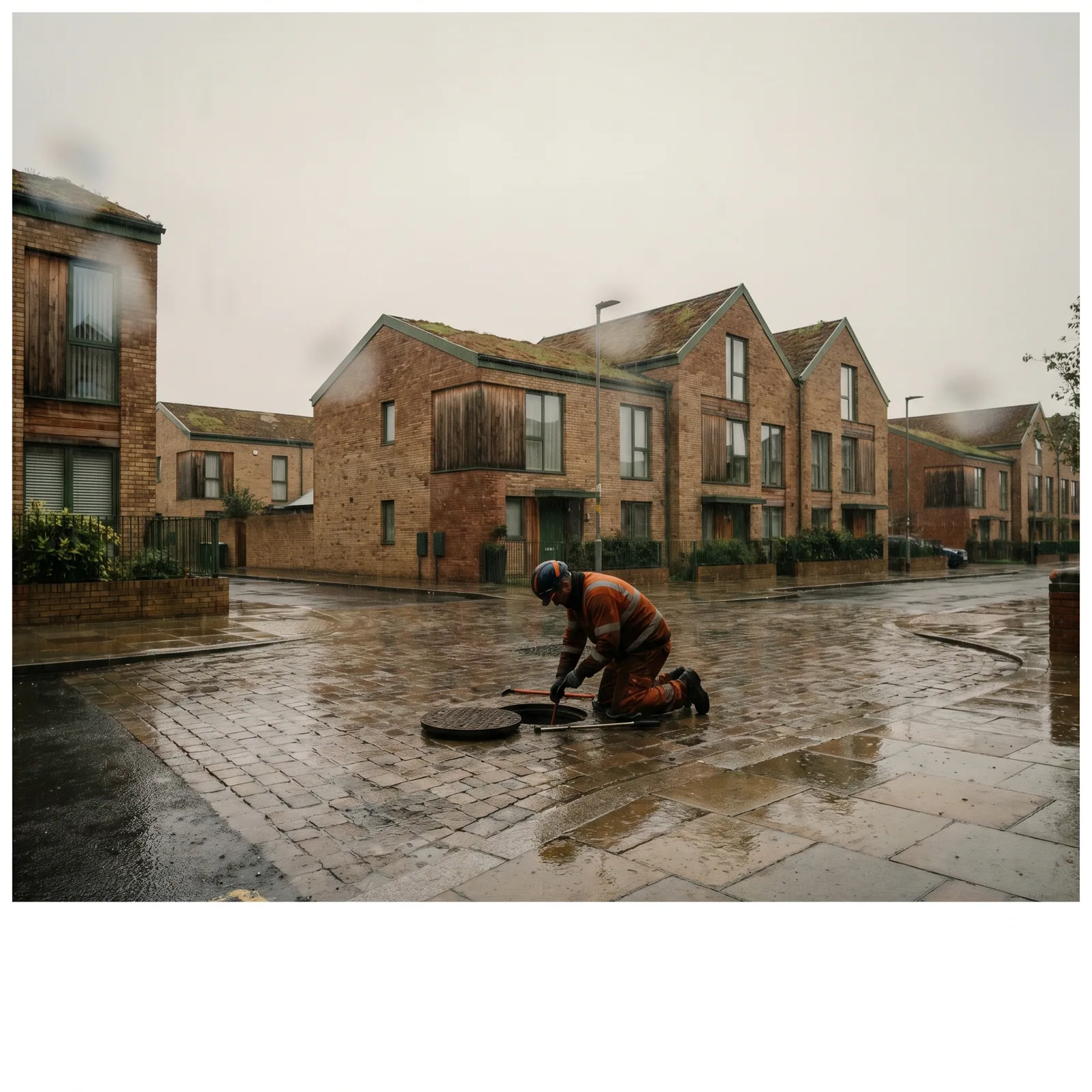
The image here supports the service context without replacing the practical guidance and postcode-led enquiry flow.
Repeated blockages, root ingress, cracks, displaced joints and deformation can all lead to a drain-repair enquiry. The symptoms alone do not show which repair is suitable. A one-off obstruction may only need drain unblocking, while a fault that returns in the same place may justify a CCTV drain survey before any structural work is discussed.
This page explains relining and non-dig drain repair in Leeds as conditional options within an evidence-led repair assessment. Availability of a particular technique must be confirmed after the pipe, access and defect have been assessed; no method is promised as suitable for every enquiry.
Request drain-repair guidance.
What drain relining and no-dig repair mean
Drain relining is a form of pipe renovation. A common method, cured-in-place pipe lining or CIPP, uses a resin-saturated tube installed inside the existing pipe. The liner is held against the host pipe and cured so that it hardens into a close-fitting “pipe within a pipe.” Depending on the system, curing may use ambient conditions, hot water, steam or light.
A localised patch repair applies the same broad principle over a shorter damaged section rather than lining the full run. “No-dig” means the main repair may be installed through existing access points; it does not guarantee that no excavation, access work or preparation will ever be required.
When relining may be suitable
Relining may be considered when survey and site information show that:
- The host pipe provides a continuous route through which the liner can be installed
- The pipe can be cleaned and prepared adequately
- The defect and required structural duty suit the proposed lining system
- The diameter, material, bends and changes in size are compatible with that system
- Existing connections and laterals can be identified and reopened correctly
- Access points and working space are adequate for the chosen installation method
- Ownership and permission to repair the affected section are clear
Possible applications can include selected cracked or leaking pipes, deteriorated sections and local defects. The word “possible” matters: two pipes with similar symptoms may need different repairs because their condition, alignment, access and connections differ.
When lining may not be the right repair
Relining is not a universal substitute for excavation. A different method may be required where:
- The pipe has collapsed or no longer provides a usable route for a liner
- Severe deformation, displacement or a missing section prevents installation
- The drain cannot be cleaned or prepared sufficiently
- Access is inadequate for the equipment or liner
- The pipe has an incorrect fall that needs to be physically regraded
- A connection cannot be located or reinstated safely
- The defect requires replacement of a chamber, junction or surrounding structure
- The proposed lining system does not suit the pipe dimensions, material or service conditions
A liner also occupies some space inside the existing pipe. The design therefore needs to account for the finished internal diameter and the drain’s required capacity. Any claim that a drain can definitely be relined should follow inspection and method-specific assessment.
A typical evidence-led repair process
1. Confirm the symptoms and responsibility
Record the postcode, affected fixtures, recurrence, overflow, access and whether neighbouring properties are affected. Before authorising private work, check whether the section may be a shared sewer, lateral drain or other asset covered by a different organisation. The guide to blocked-drain responsibility in Leeds explains the main distinctions.
2. Survey and locate the defect
A camera survey can record the fault, its position, the pipe material and dimensions, bends, connections and any obstruction to installation. If the drain is blocked or coated with deposits, it may need clearing or appropriate drain jetting before the camera can show the pipe condition properly.
3. Clean and prepare the host pipe
Roots, scale, silt or other material may need to be removed. Preparation is part of the suitability decision: a lining system needs a host pipe that can be accessed and prepared to the method’s requirements.
4. Select and design the repair
The evidence may support monitoring, a local patch, full-length lining, excavation or replacement. The chosen repair should identify the section being treated, the intended function of the liner, the installation method and how existing connections will be handled.
5. Install and cure the liner
For CIPP, the liner is positioned in the pipe, pressed against the host pipe and cured. The ends are then trimmed and sealed as required. Service connections or laterals within the lined section must be reinstated after curing before the pipeline returns to normal use.
6. Verify the completed work
Post-installation CCTV can confirm that the lined section and reopened connections are visible and free from obvious installation problems. Appropriate records may include before-and-after footage, the repaired location, method used and any limitations or follow-up recommendations.
Patch repair, full lining or excavation?
- Localised patch: may suit an isolated defect when the surrounding pipe and access are suitable
- Full-length liner: may suit a longer deteriorated section where the route, connections and design allow it
- Excavation or replacement: may be necessary for collapse, severe deformation, missing pipe, incorrect fall, inaccessible sections or defects that lining cannot address
- No structural repair: may be appropriate when clearing resolves a one-off blockage and inspection does not identify a repairable defect
The appropriate choice depends on evidence rather than a preference for “no-dig.” The guide comparing jetting, rodding and CCTV surveying also explains why clearing and diagnosis are separate stages.
Evidence for owners, landlords and insurers
Property owners, landlords, buyers, managers and insurers may need a clear record before approving work. Useful information can include the defect location, pipe condition, survey footage, still images, measurements, responsibility assessment, proposed repair scope and the reason an alternative was rejected.
When comparing recommendations, use the Leeds drainage-contractor selection checklist to ask what the quote includes, what evidence supports the method and what would cause the price or scope to change.
Technical basis for this guidance
This explanation follows the broad process described by the United Kingdom Society for Trenchless Technology for CIPP lining and its overview of pipeline lining techniques. CIPP systems for underground non-pressure drainage and sewerage networks are covered by BS EN ISO 11296-4. These references describe the technology; they do not establish that a specific method is suitable for an individual property or confirm that this business offers it.
Leeds areas covered
This site is focused on Leeds and the surrounding area, including Horsforth, Headingley, Chapel Allerton, Roundhay, Moortown, Alwoodley, Adel, Cookridge, Meanwood, Kirkstall, Bramley, Pudsey, Farsley, Morley, Beeston, Holbeck, Hunslet, Rothwell, Garforth, Cross Gates, Seacroft, Oakwood, Harehills, Leeds city centre, Yeadon, Guiseley, Otley and Wetherby.
For local enquiry details, see the evidence-led guidance for recurring drain problems in Farsley and CCTV and repair assessment in Horsforth. Both pages make clear that recurring symptoms justify investigation rather than proving that repair is required.
Related services
- Blocked drains
- Blocked toilets
- Outside drains
- Drain jetting
- CCTV drain surveys
- Emergency drain unblocking
- Commercial drainage
Request drain-repair guidance in Leeds
Send the postcode, symptoms, recurrence, access details and any existing survey findings. The enquiry can then be assessed for clearing, further investigation, a responsibility check or an appropriate repair discussion without assuming that lining or excavation is required.
Related guidance
Useful guidance for this service
These guides explain common symptoms and next-step questions without replacing the service enquiry page.
Core services
Drainage help for the problem in front of you
Choose the closest issue, or send the form if you are not sure what is causing the blockage.
Service
Drain unblocking Leeds
This page is for drains that are slow, blocked, backing up or repeatedly failing. Send the location and symptoms so the enquiry can be assessed for clearing, jetting, inspection or another appropriate next step.
View service
Service
Blocked toilet Leeds
A blocked toilet is stressful, unhygienic and difficult to ignore. It becomes more urgent if it is the only toilet in the property, if waste is backing up, or if more than one drain is affected.
View service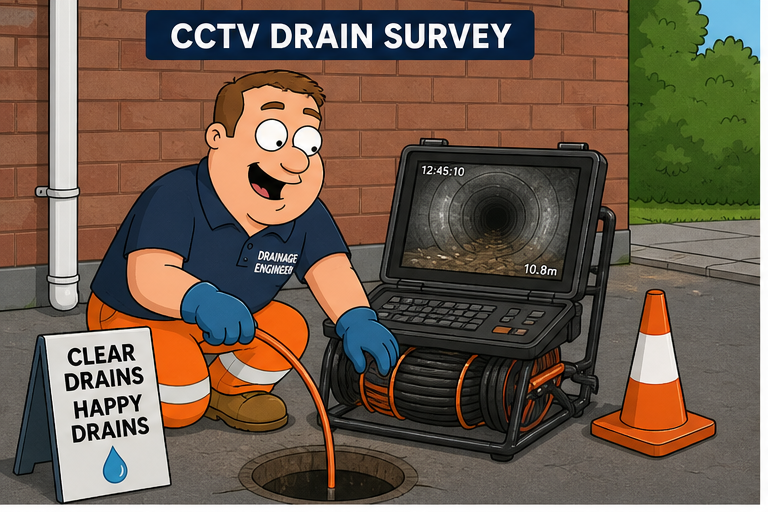
Service
CCTV drain survey Leeds
A CCTV drain survey uses a camera to inspect the inside of the pipework. It can show what is causing a blockage, where a defect sits and whether a repair is needed.
View service
Service
Commercial drainage Leeds
A blocked drain at a business can disrupt staff, customers, tenants, hygiene standards and opening hours. Fast, clear triage matters.
View serviceFAQs
Common questions
How do I know if a drain needs repair?
Repeat blockages, recurring smells, visible ground movement, rodent problems or CCTV evidence can all point to a damaged drain.
Can drains be repaired without digging?
Sometimes. A full-length liner or localised patch may repair a suitable pipe through existing access points, but no-dig is not appropriate for every defect. A collapsed, badly deformed or severely misaligned pipe, an inaccessible run or a fault involving the pipe's fall may still need excavation or replacement.
What is drain relining?
Drain relining places a resin-based liner inside an existing pipe and cures it to form a close-fitting pipe within the host pipe. Localised patch systems use a similar principle over a shorter defect. The drain normally needs to be surveyed, cleaned and prepared before a lining method can be selected.
When may drain relining be suitable?
Relining may be considered when the host pipe provides a viable route for a liner, the defect can be prepared and the proposed liner is appropriate for the pipe dimensions, material, bends, connections and required structural duty. Suitability must be assessed from survey and site information rather than symptoms alone.
What can drain relining not fix?
Lining cannot correct every drainage fault. It may be unsuitable where a pipe has collapsed, is severely deformed or displaced, has a missing section, cannot be cleaned or accessed, or has an incorrect fall that must be physically regraded. Connections also need to be identified and reinstated correctly.
Do I need a survey before repair?
Usually, yes. A CCTV drain survey can record the defect, location, pipe condition, access and connections. The pipe may also need cleaning before its condition or suitability for lining can be assessed properly. Repair decisions should be based on evidence, not guesswork.
Who pays for drain repair?
It depends on whether the drain is private, shared, a lateral drain, a sewer or part of highway drainage. The location and what the pipe serves matter.